
The Midyear Check-In Your Journal Deserves
Reflect, refocus, and rebuild a journaling rhythm that fits the life you’re living now.


Hello again! It’s been a little while since my last post, thank you for sticking around!
I posted a flip-through of my first journal of the year this week, packed with all my planning and memory keeping from January to June, and as I flipped I started to notice some things - spreads I was making more complex than they needed to be, changes I was making to each spread after setting it up - repeatedly - without realising I needed it to work differently. It was a great opportunity to reflect that I may not have had if not for the Youtube journaling content wheel - set the journal up, use the journal, flip through the journal, start the next one etc.
Whether you’re finishing a journal and starting a new one or not, I urge you to flip through your own journal or planner with a reflective eye too. Whether you’re a goal-setter, a planner enthusiast, or just someone trying to stay on top of things, this is a perfect time to pause and ask: Is my journal still working for me?
Not in an aesthetic sense (although that matters too), but in a functional one. Am I actually using the spreads I make? Are they helping me manage my time, stay grounded, and move toward the kind of life I want, or are they just filling up space?
Here’s how I’m approaching this midyear journal reset, not just on my goals, but on how I’m journaling to support them.
Step 1: Look at What’s Working (and What’s Not)
I have these as headers on my monthly routine spread that I’m using to refine my new morning, evening and weekly routines, but let’s zoom out and look at the journal or planner as a whole. Flip back through your journal from the past few months and ask yourself:
Which spreads did I use consistently?
Which ones did I abandon after a few days?
Are there layouts that felt like a chore to maintain?
Did I feel overwhelmed by my setup, or did it help clarify my days?
Sometimes we keep making the same layouts out of habit, even if they’re no longer serving us. Identifying what’s actually helpful is the first step to making your journal work smarter.
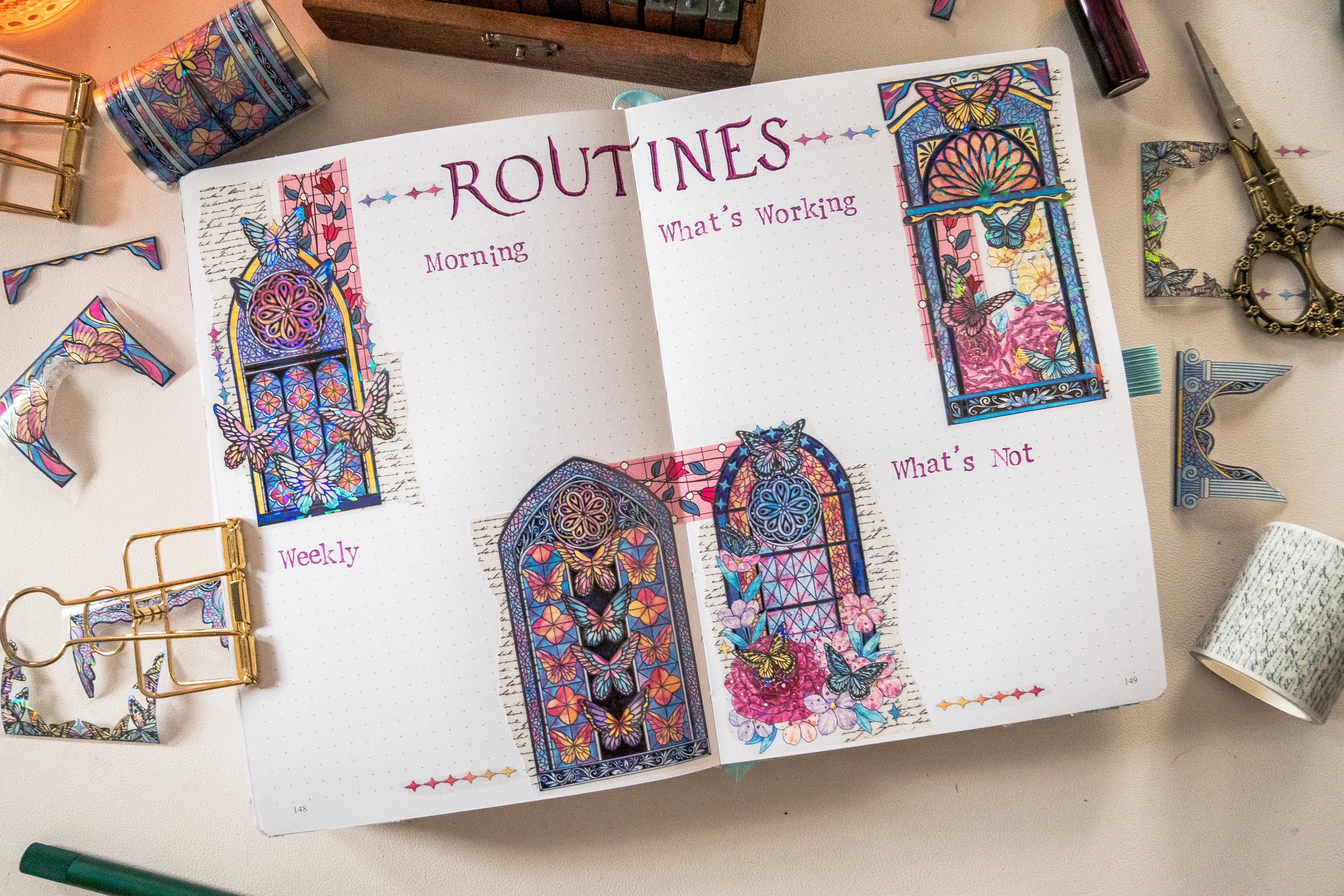
For example: I’ve been using this routines spread to learn about what works well for me after years of being a super flexible work-from-home gal who suddenly craves some structure in her life. I’ve been using it to refine a morning, evening and weekly routine for myself… but do you see an “Evening” header on there? Me neither! I added it retroactively every month… for months on end! Why?! Let’s make it better next time!
Step 2: Reassess Your Goals
Midyear is a natural moment to revisit the intentions you set in January (if you set any! It’s OK if you didn’t!) and decide what still matters to you now.
Maybe you’ve completed a few things. Maybe some goals no longer feel aligned. Maybe you’ve gained clarity on what you really want to focus on for the second half of the year.
Try reflecting on
Which goals or habits have shifted for me since January?
Are there new priorities I want to make room for?
What kind of support or tracking would actually help me now?
Once you’ve done this, you can adjust your journal to reflect your current reality - not just your past intentions.
Step 3: Streamline Your Setup
Now that you know what’s working and where you’re headed, it’s time to simplify.
Cut the clutter: Stop making spreads you don’t use. If you still like the idea of one you weren’t using, see if you can simplify it to make it more approachable.
Keep what’s useful: Keep trackers, logs, and lists that make your life easier or make you happy. Even if something doesn’t serve a greater purpose, if you like it and you use it, it’s worth keeping!
Experiment with efficiency: Try a weekly setup that takes less time to build. Consider templates, printables, functional stickers, or simpler layouts.
The goal here isn’t to make your journal minimalist - unless that’s your vibe - but to remove friction. The fewer barriers between you and your journal, the more likely you’ll actually use it.
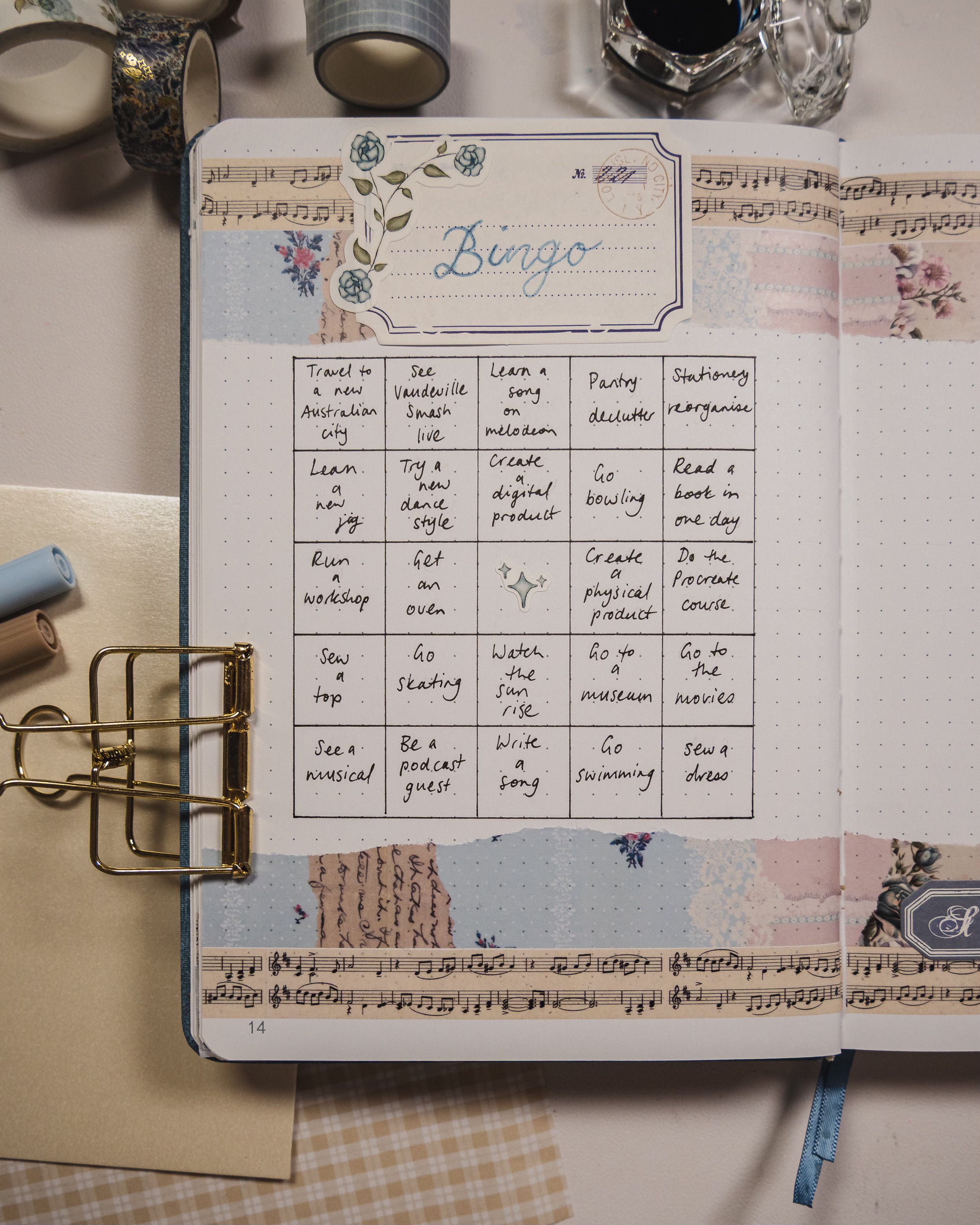
Step 4: Build In Flexibility
Your journal doesn’t have to be rigid to be useful. Maybe that means:
Leaving more white space to reflect on how things are going, or adapt when you think of new spreads you might need later
Creating one “reset” spread a month to track changes in focus or energy
Using sticky notes or movable parts to reflect evolving plans
It’s okay if your goals change. It’s okay if your process does too. Journaling is most powerful when it adapts alongside you.
If you’ve fallen off your journaling rhythm, this is a beautiful moment to pick it back up - not with guilt, but with intention. Think of this as a journal tune-up: take what works, toss what doesn’t, and rebuild a system that fits your life right now.
New Videos

I’m trying something totally new for my July bujo theme - decorating exclusively with Cricut vinyl! It was a MISSION but it ended up looking really schmick!

Keen on journaling but not in love with your handwriting? Here are 7 tips you can start using right now to improve your handwriting - no calligraphy knowledge necessary!

Let’s explore the 6 wonderful books I finished in June - all winners! Plus check out my midyear reading stats!

I used ONLY the Tom’s Studio Lumos Pro Duo pen for an entire month, to see if it really can replace ALL my markers, brush pens and fineliners. Click through to find out how it went!
Until next fortnight, wishing you gentle progress, peaceful pages, and a drawer full of washi tape.
xx
Erin